
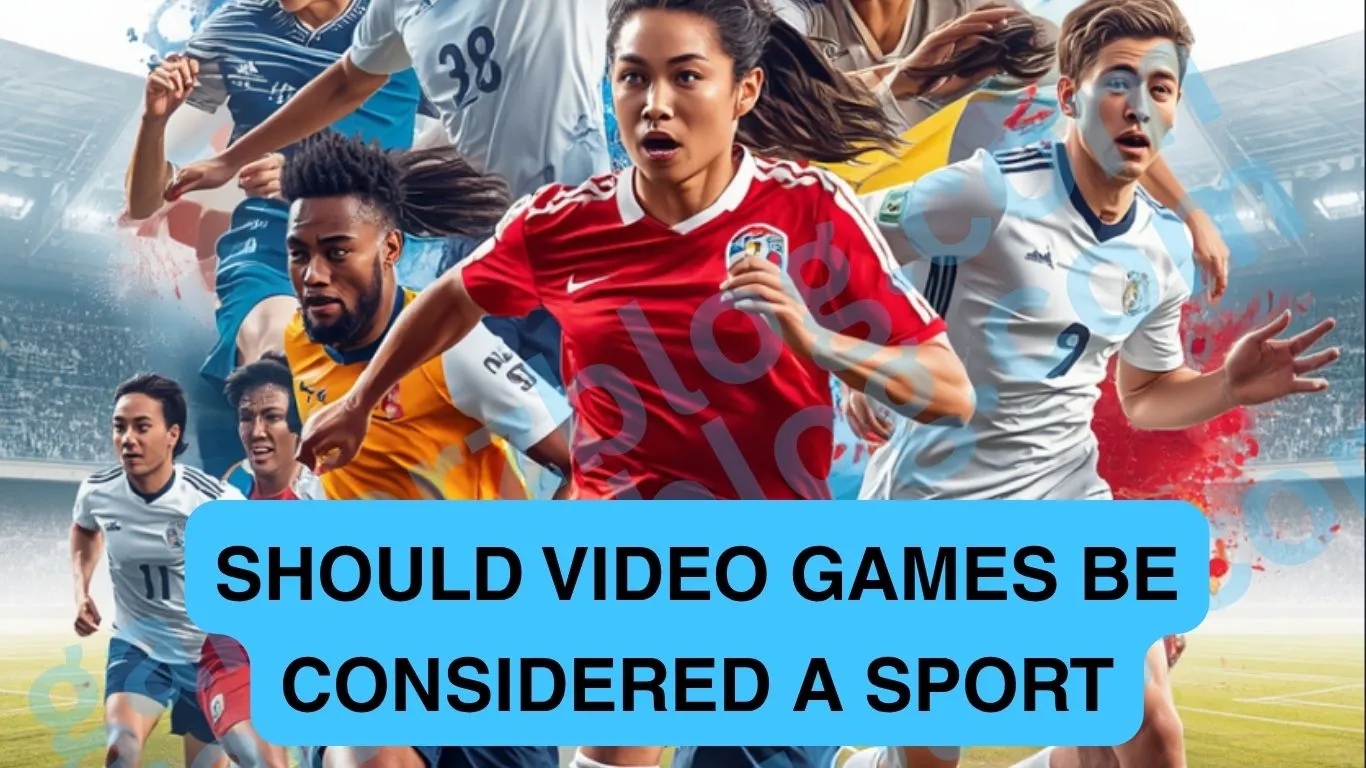
There was a time when “gaming” was simply seen as a waste of time. Parents would often say, You’re glued to your phone all day—why don’t you do some studying? But in today’s world, tournaments for games like BGMI, Valorant, Free Fire, and FIFA feature prize pools worth crores; stadiums are packed, and players have become celebrities.
So, the question arises should video games officially be granted the status of a sport? Let’s look at both sides of the argument.
Table of Contents
The Rise of Esports


Esports is no longer just a minor hobby it has evolved into a global industry with millions of viewers worldwide. Major tournaments like the ‘League of Legends World Championship’ draw hundreds of thousands of simultaneous viewers, while events such as ‘The International’ and the ‘Esports World Cup’ feature prize pools reaching tens of millions of dollars.
Its reach extends across the globe—from South Korea and China to the US, Europe, Brazil, and Southeast Asia. Institutions are also taking note esports was a medal event at the Asian Games in Hangzhou, and the IOC has discussed its place within the Olympic movement.
Are Video Games a Sport?

In today’s digital world, video games are no longer just a source of entertainment; they have evolved into professional careers and competitive activities. While people once played games merely to pass the time, gaming has now become a billion-dollar industry. Millions of players worldwide engage in video games, and many are even earning money by becoming professional gamers.
When we think of sports, games like cricket, football, basketball, and tennis come to mind. In these sports, players engage in physical activity and utilize their fitness, stamina, and skills. However, when it comes to video games, an important question arises: Should video games be considered a sport?
In my opinion, competitive video gaming should also be recognized as a sport, as it requires skill, strategy, teamwork, concentration, and regular practice. That said, there are significant differences between traditional sports and esports that are important to understand.
What Are Video Games and Esports?

Video games are electronic games played on computers, mobile phones, gaming consoles, or other digital devices. The purpose of these games can range from entertainment and competition to problem-solving and teamwork.
“Esports” stands for Electronic Sports. It refers to playing video games at a competitive level, where individual players or teams compete against one another.
Popular esports titles include games such as Counter-Strike 2, Valorant, League of Legends, Dota 2, and Rocket League. Players participate in tournaments for these games and can earn prizes, salaries, or sponsorships based on their performance.
Esports tournaments take place both online and offline in stadiums or arenas. Major competitions often draw thousands of spectators in person, while millions of viewers watch via online streams. That is why esports is no longer just a hobby. It is an organized competitive activity in which professional players, coaches, teams, sponsors, and tournament organizers play important roles.
Why Should Video Games Be Considered a Sport?
There are several strong arguments in favor of considering video games a sport.

- First and foremost, gaming requires skill. A professional gamer cannot win a tournament simply by pressing buttons at random; they must thoroughly understand the game’s rules, controls, maps, characters, and strategies.
- Secondly, professional gamers must practice regularly. Just as a cricketer practices to improve their batting, an esports player works on enhancing their aiming, reaction time, movement, and decision-making skills.
- Thirdly, teamwork is crucial in many competitive games. Team members must communicate effectively, understand their opponents’ strategies, and make quick decisions in challenging situations.
Furthermore, gaming involves mental pressure. During a major tournament, a single small mistake can lead to the entire team’s defeat. Players need to remain calm under pressure and maintain their focus.
These qualities are also important in traditional sports. This is why there are strong arguments for recognizing competitive gaming as a sport.
Physical Activity and Mental Skills in Gaming
The biggest difference between video games and traditional sports lies in physical activity.
In sports like football, cricket, and basketball, players engage in running, jumping, throwing, and other physical activities. In these sports, strength, stamina, speed, and physical fitness directly impact performance.
In esports, physical movement is comparatively limited, especially when players are seated in front of a computer. However, this does not mean that physical abilities are unimportant in gaming.
Professional gamers require hand-eye coordination, quick reactions, precise movements, and the ability to maintain concentration for extended periods. They need to pay attention to their physical health alongside their mental fitness.
Issues such as poor posture, eye strain, and a lack of physical activity can arise during long gaming sessions. Therefore, exercise, proper sleep, a healthy diet, and regular breaks are important for professional players.

There is an important point to understand here: the level of physical activity varies across different sports. Consequently, the decision to classify an activity as a sport should not depend solely on the amount of running or physical movement involved.
Why Do Some People Oppose Video Games as a Sport?
Not everyone is in favor of recognizing video games as a sport. Some people have reasonable arguments against it.
The most common argument is that physical fitness and athletic ability play a major role in traditional sports. A football player might have to run throughout a match, whereas an esports player often competes while sitting in a chair. Another argument is that video games are developed by private companies. The company can change the game’s rules, updates, and competitive systems. While the rules of traditional sports like football and cricket do change, their basic formats remain relatively stable.
Some people also argue that excessive gaming can be harmful to young people. If a student spends the entire day gaming—ignoring studies, sleep, exercise, and family responsibilities—their daily life can be negatively affected.
However, the solution to these problems is not to reject gaming entirely. A better approach is to promote responsible gaming, encourage healthy routines for players, and establish clear rules for professional competitions.
The Rise of Esports Around the World
The popularity of esports has grown worldwide over the past few years. Internet access, powerful computers, gaming consoles, and live-streaming platforms have made competitive gaming more accessible.
Today, players can stream their gameplay online, participate in tournaments, and showcase their skills to an international audience.
South Korea is well-known for its esports culture. Professional esports scenes have also developed in China, the United States, and many European countries.
The esports industry has created new career opportunities. Beyond just players, coaches, analysts, shoutcasters, commentators, tournament organizers, video editors, and content creators can all be part of this industry.
Many universities also offer esports clubs and competitive gaming programs. Some institutions also offer esports-related scholarships to eligible students, though this is not available at every university.
This growth indicates that esports is being viewed worldwide as a serious competitive activity.
Can Video Games Become a Professional Career?
Nowadays, gaming can be a professional career, but achieving success in it is not easy.
Becoming a professional gamer requires strong skills, consistent practice, discipline, and competitive experience. Players must perform well in tournaments and compete against opponents of a similar skill level.
There are multiple ways to earn money through gaming. Some players win tournament prize money, others work for esports teams on a salary, and some earn through sponsorships or streaming.
However, not every gamer becomes successful. Competition is fierce, and income is not guaranteed. Many players have to practice for years to reach the professional level.
Therefore, when choosing gaming as a career, students should also consider their education, financial stability, and alternative career options.
Having an interest in gaming is great, but becoming a professional gamer also requires planning and realistic expectations.
The Importance of Discipline and Teamwork
Just like in traditional sports, discipline is crucial in esports.
Professional players must adhere to practice schedules, analyze their mistakes, and continuously improve their performance.
In team-based games, communication is one of the most vital skills. If team members do not communicate effectively with one another, defeating opponents can become difficult.
Players also need to know how to accept defeat and learn from their mistakes. While winning every tournament isn’t possible, there is always something new to be learned from every match.
These qualities are valuable not only in gaming but also in education, professional life, and personal development.
Esports can provide young people with opportunities to develop skills such as teamwork, strategic thinking, decision-making, and problem-solving.
Should Schools and Colleges Recognize Esports?
In my opinion, schools and colleges should consider esports as an organized extracurricular activity.
Educational institutions can organize gaming clubs, esports competitions, and supervised tournaments. This allows students to explore their interests while honing skills like teamwork and leadership.
However, it is essential to maintain a balance within esports programs; students’ academics, physical exercise, and mental health should not be neglected.
Schools should educate students about responsible gaming. They need to understand that gaming and education can be managed simultaneously through proper time management.
Recognizing esports does not mean diminishing the importance of traditional sports. Both activities can help students develop different sets of skills.
The Future of Video Games as a Sport
Esports and competitive gaming are likely to evolve further in the future. Advancements such as better technology, faster internet, virtual reality, and improved gaming systems could create new competitive experiences.
The growth of professional tournaments and streaming platforms could help gaming reach an even wider audience. At the same time, it will be important to focus on esports rules, player welfare, fair competition, and responsible gaming.
It is not necessary to classify every video game as a sport. Casual gaming is primarily for entertainment, whereas esports involves organized competition, defined rules, skilled performance, and professional training.
Therefore, one must understand the distinction between casual gaming and competitive esports. The argument for recognizing competitive esports as a sport is stronger, given the presence of structured competitions and measurable performance.
Arguments in favor
- Skill and training: Pro gamers have to put in just as much hard work as traditional athletes. This involves 8–10 hours of daily practice, strategy sessions, and coordination with coaches, analysts, and teammates. Their reflexes, hand-eye coordination, and decision-making speed are remarkable; a split-second decision can turn the tide of an entire match.
- Teamwork and strategy: Communication, leadership, and planning are crucial in team-based games—much like how a captain and team must work together in cricket or football.
- Competitive structure: Esports features leagues, rankings, tournaments, rules, and referees; in other words, a complete competitive ecosystem exists.
- Career opportunities: Beyond just the players, new career paths are opening up for coaches, commentators, analysts, streamers, and event managers. It has evolved into a full-fledged industry.
- Inclusivity: Gaming is not limited by physical fitness requirements, allowing people from diverse backgrounds—and often those with physical disabilities—to compete on equal footing.
Arguments against
- Lack of physical activity: The primary argument is that sports involve physical exertion, whereas gaming involves the player remaining seated. Critics argue that mere competition does not make an activity a sport; otherwise, chess or poker would also have to be classified as sports.
- Health concerns: Prolonged sitting, eye strain, sleep deprivation, and wrist issues (such as carpal tunnel syndrome) are common. There is also a risk of addiction, particularly among children and teenagers.
- Commercial control: Unlike cricket or football, which are not owned by a single entity, every video game is the property of a specific company. That company can alter the game’s rules or shut it down entirely at any time, raising questions about the stability of esports.
- The issue of violence: Many popular games involve violence, and some people believe it is inappropriate to associate such games with the Olympic spirit.
Also Read: Why Gaming should be a sport zeromaggaming
The Middle Path
A practical solution to this debate could be to broaden the definition of “sport.” If the International Olympic Committee recognizes chess as a sport—and given that disciplines like shooting and archery involve minimal physical movement—it seems unfair to reject esports solely on those grounds. We could create distinct categories for “mind sports” and “physical sports,” with esports falling under the “mind sports” classification.
At the same time, ensuring esports is practiced responsibly requires health guidelines, age limits, screen-time regulations, and fitness programs for players. Many top teams now provide gym access, meditation sessions, and diet plans for their players, signaling that the industry itself is evolving.
What is Esports?
Esports (electronic sports) is organized, competitive video gaming where individual players or teams compete in tournaments and leagues, often for prize money. Popular games include Valorant, BGMI, Free Fire, FIFA, Dota 2, and League of Legends.
Has esports been officially recognized as a sport?
It depends on the country and the organization. Some governments and sports bodies recognize it, and esports has been a medal event at the Asian Games. Discussions regarding this have been ongoing within the Olympic movement for years, but esports is not part of the regular Olympic program. In India, too, esports has found a place in multi-sport events and discussions on sports policy.
Do pro gamers really train like athletes?
Yes, absolutely—at the top level. Pro players practice for several hours daily, review match footage, work with coaches and analysts, and follow team strategies. Many teams now also provide support for fitness, sleep, and mental health.
Is gaming physically demanding?
Not in the same way as running or football. However, it requires quick reflexes, fine motor control, stamina, and intense focus. Critics argue that the lack of significant physical exertion is the primary reason why it shouldn’t be considered a sport.
If esports is a sport, then what about chess or poker?
The IOC has recognized chess as a sport. There is more debate surrounding poker due to its association with gambling and luck; that is why many suggest creating a separate category for “mind sports.”
Conclusion
Ultimately, whether or not we label video games as a “sport” depends largely on our definition. If sport is defined strictly by physical exertion and sweating, then esports might not fit the mold. However, if sport is defined by skill, discipline, teamwork, competition, and hard work, then esports certainly measures up.
For today’s generation, gaming is not merely entertainment; it has become a legitimate career path and a passion. We need to update our traditional mindset, understand this new world with a balanced perspective, and provide proper guidance to our children. After all, the day may well come when “gamer” is a title held in as much regard as “cricketer” or “footballer.”
Also Read:
5 thoughts on “Should Video Games be considered a sport”